The Future of AI in Enterprise Software: Trends, Strategies, and Implementation Guide for 2024
Explore how AI is transforming enterprise software with predictive analytics, autonomous agents, and generative AI. Learn strategic implementation approaches for CTOs and technology leaders.
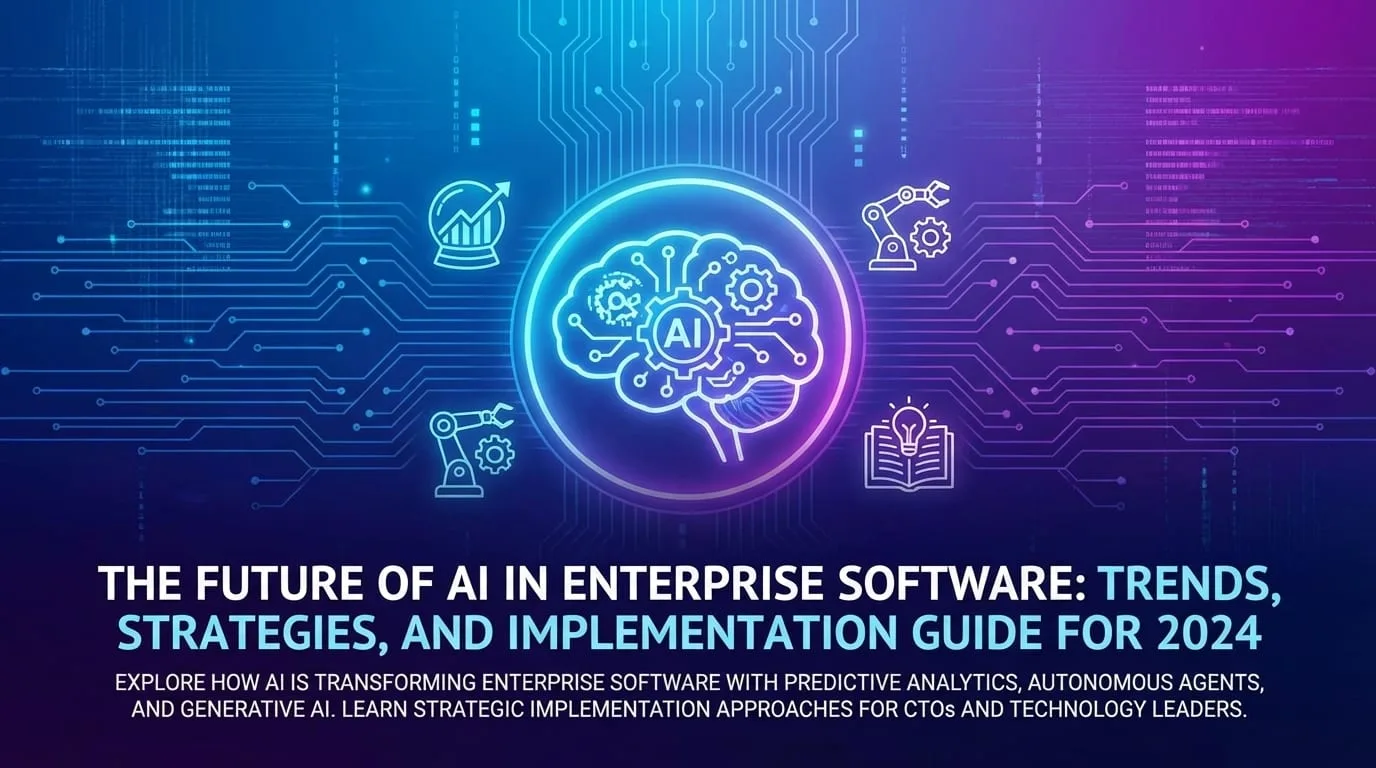
Artificial Intelligence is no longer a futuristic concept-it's fundamentally reshaping how enterprise software is designed, built, and operated. As organizations move beyond simple automation, the next generation of enterprise applications will be defined by their ability to reason, predict, and adapt in real-time.
In this comprehensive guide, we'll explore the key AI trends transforming enterprise software, provide a strategic framework for implementation, and share practical insights for technology leaders navigating this transformation.
The Evolution: From Automation to Intelligence
Traditionally, enterprise software was built to automate defined processes. You input data A, apply rule B, and get result C. This deterministic approach is powerful but inherently limited by predefined rules and rigid workflows.
AI introduces probabilistic reasoning that fundamentally changes this paradigm. Modern AI-powered systems can analyze data A, infer context from historical patterns, identify anomalies, and suggest not just result C, but also alternatives D and E-each with varying degrees of confidence and supporting rationale.
Why This Matters for Your Business
This shift enables:
- Proactive decision-making instead of reactive responses
- Personalized experiences at scale without manual configuration
- Continuous optimization of processes without human intervention
- Discovery of insights hidden in complex data relationships
Key AI Trends Reshaping Enterprise Software
1. Generative AI for Knowledge Management
Large Language Models (LLMs) are revolutionizing how organizations access and leverage their internal knowledge. Instead of searching through folders and wikis, employees can ask natural language questions and receive synthesized answers from across the company's documentation.
Practical Applications:
- Intelligent documentation search and summarization
- Automated report generation from multiple data sources
- Code documentation and explanation tools
- Customer support knowledge base augmentation
2. Predictive Analytics in Operations
By analyzing vast amounts of historical data combined with external factors (weather patterns, market trends, geopolitical events), AI models can predict operational challenges weeks before they occur.
Use Cases:
- Supply Chain: Predict disruptions and automatically adjust inventory
- IT Operations: Forecast infrastructure failures before they impact users
- Finance: Detect fraud patterns and anomalies in real-time
- HR: Predict employee attrition and engagement trends
3. Autonomous Agents and Agentic AI
We're witnessing the rise of AI "agents" capable of performing complex, multi-step tasks. An AI agent could identify a customer support issue, categorize it, research relevant solutions, draft a response, and even trigger follow-up actions-all with human oversight rather than direct intervention.
Key Characteristics:
- Goal-oriented behavior with multi-step planning
- Tool use and API integration capabilities
- Memory and context retention across interactions
- Human-in-the-loop validation for critical decisions
4. AI-Powered Developer Tools
The software development lifecycle itself is being transformed by AI:
- Code generation and completion (GitHub Copilot, Claude)
- Automated testing and test case generation
- Code review and security vulnerability detection
- Documentation generation and maintenance
Strategic Framework for AI Integration
For CTOs and CIOs, the challenge isn't simply "adopting AI"-it's integrating it effectively while managing risk and demonstrating ROI. Here's a proven framework:
Phase 1: Foundation Building
Data Readiness Assessment AI is only as good as the data it learns from. Before any AI initiative, assess:
- Data quality, completeness, and consistency
- Data accessibility across silos
- Data governance and privacy compliance
- Historical data availability for training
Infrastructure Evaluation
- Cloud vs. on-premises AI capabilities
- GPU/compute requirements for model training
- API and integration architecture
- Security and compliance requirements
Phase 2: Use Case Prioritization
Not all AI use cases deliver equal value. Prioritize based on:
| Factor | High Priority | Low Priority |
|---|---|---|
| Business Impact | Revenue/cost directly affected | Nice-to-have improvements |
| Data Availability | Clean, labeled data exists | Requires significant data work |
| Complexity | Well-defined problem scope | Ambiguous requirements |
| Risk | Low regulatory/ethical risk | High compliance concerns |
Phase 3: Implementation and Governance
Governance Framework Essentials:
- Clear accountability for AI decisions
- Bias testing and fairness audits
- Explainability requirements by use case
- Incident response procedures
- Regular model performance monitoring
Human-in-the-Loop Design The most effective AI systems augment human capabilities rather than replacing them. Design interfaces that:
- Surface AI recommendations with confidence levels
- Enable easy override and feedback mechanisms
- Capture human corrections for model improvement
- Maintain audit trails for accountability
Common Pitfalls to Avoid
- Starting with technology, not problems: Identify business problems first, then evaluate if AI is the right solution
- Underestimating data requirements: Plan for 60-70% of project time on data preparation
- Ignoring change management: AI adoption requires cultural and process changes
- Expecting immediate ROI: Most AI initiatives take 12-18 months to show measurable returns
- Neglecting ongoing maintenance: AI models require continuous monitoring and retraining
Measuring AI Success
Establish clear KPIs before implementation:
Efficiency Metrics:
- Process cycle time reduction
- Cost per transaction
- Error/exception rates
Business Impact Metrics:
- Revenue influenced by AI recommendations
- Customer satisfaction scores
- Employee productivity gains
Technical Metrics:
- Model accuracy and drift
- System latency and availability
- Data quality scores
The Path Forward
"The true power of AI in the enterprise lies not in replacing humans, but in freeing them from the mundane to focus on the strategic."
The future of enterprise software is intelligent, adaptive, and human-centric. Organizations that embrace this shift today-with thoughtful strategy and robust governance-will build sustainable competitive advantages.
Key Takeaways:
- AI is evolving from automation to autonomous reasoning
- Data readiness is the foundation of AI success
- Start with high-impact, low-risk use cases
- Design for human-AI collaboration, not replacement
- Establish governance before scaling
At EGI Consulting, we help businesses navigate this complex landscape, turning AI potential into practical, measurable business outcomes. Contact us to discuss your AI strategy.
Keep reading
All articles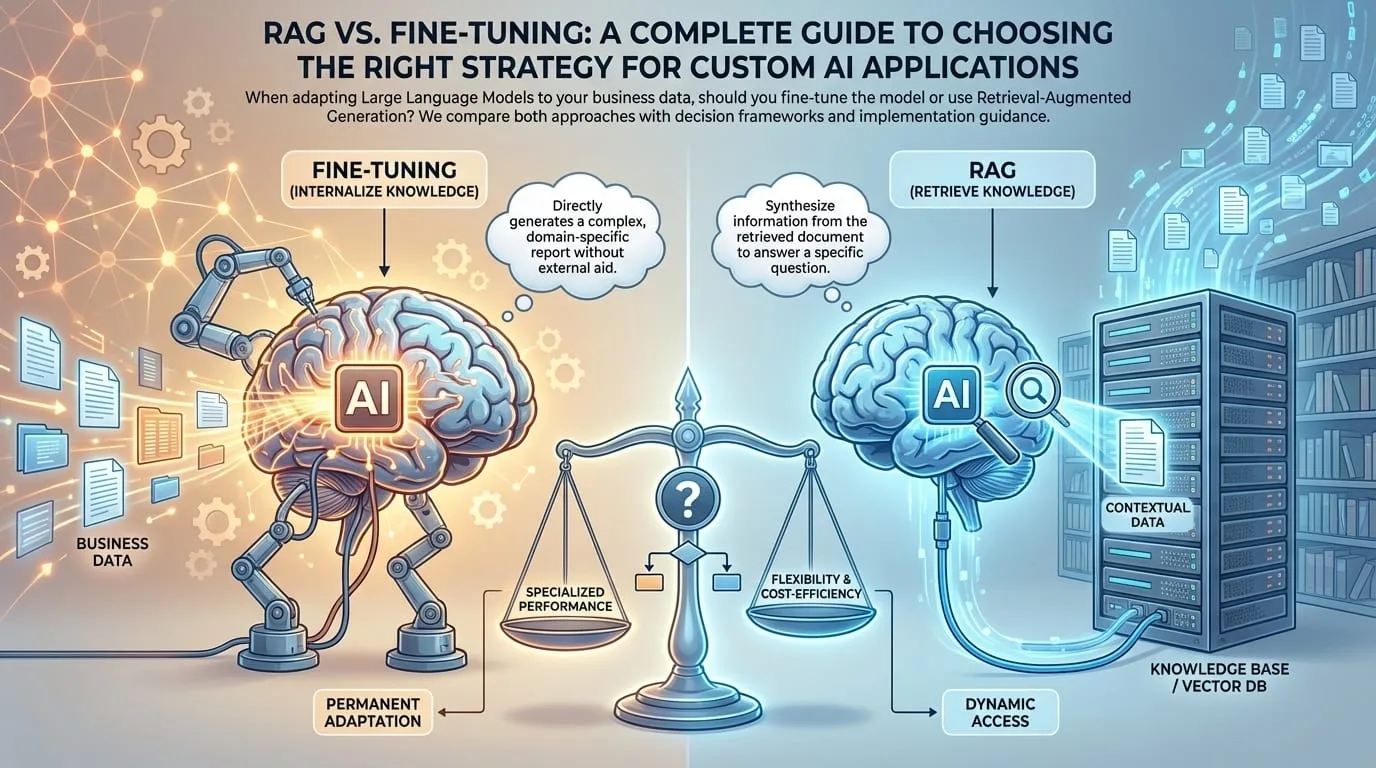
RAG vs. Fine-Tuning: A Complete Guide to Choosing the Right Strategy for Custom AI Applications
AI Workflow Automation: How to Identify High-ROI Use Cases Before You Build
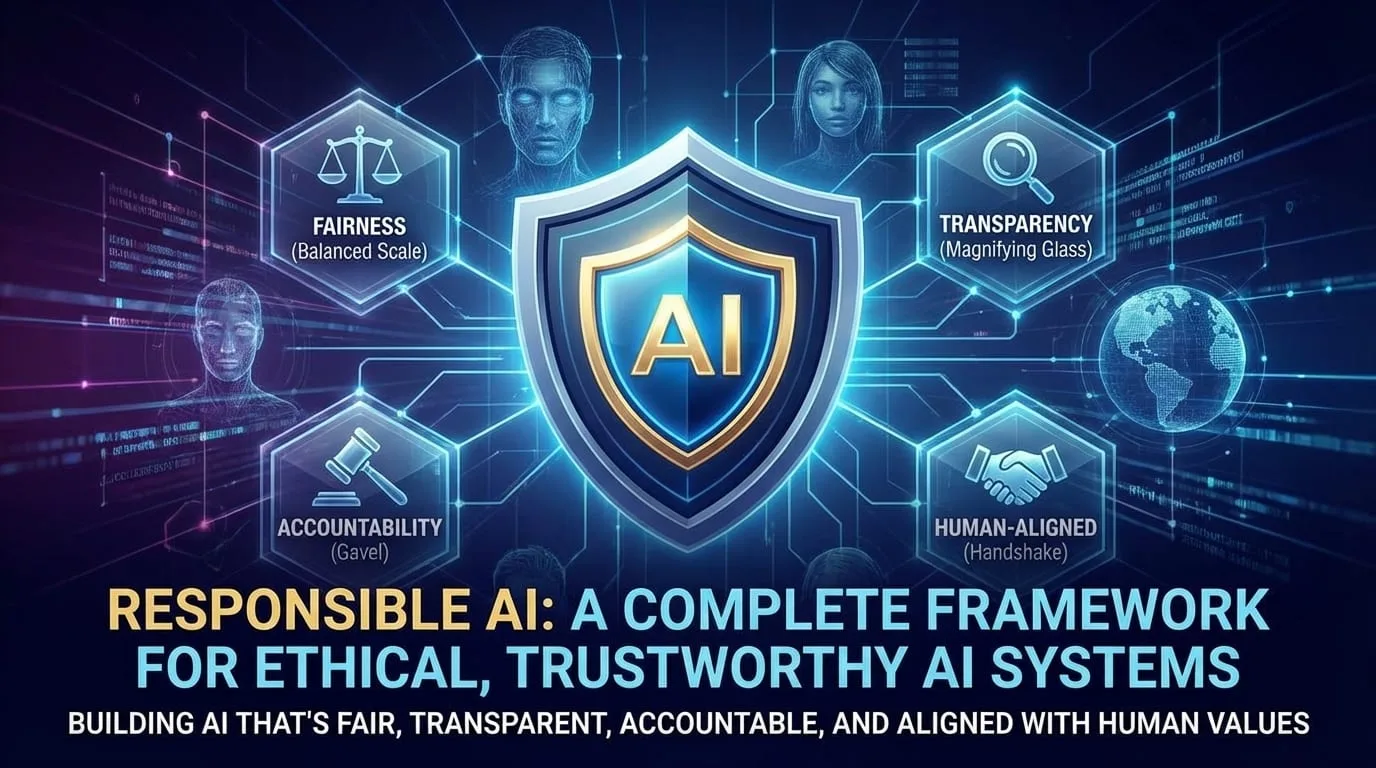
Responsible AI: A Complete Framework for Building Ethical, Trustworthy AI Systems
Get new articles by email.
One or two a month. No marketing, no forwarding your address. Unsubscribe anytime.