Building a Data-Driven Culture: A Complete Framework for Organizational Transformation
Data is often called the new oil, but without the right engine, it's useless. Learn how to move beyond dashboard fatigue and build a truly data-driven organization with our proven framework.
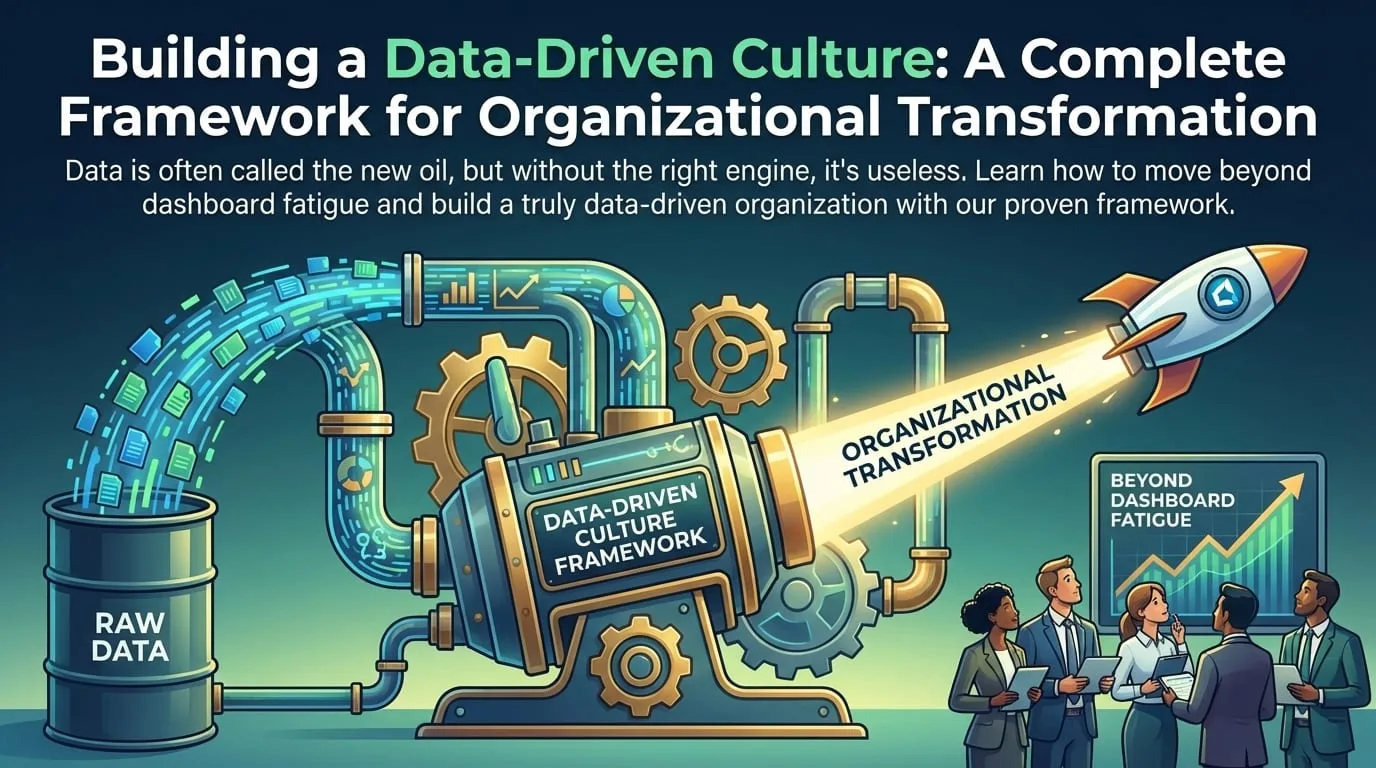
Every executive wants their organization to be "data-driven." It's the mantra of modern business. Yet, despite massive investments in data lakes, warehouses, and BI tools, many companies struggle to translate data into decision-making.
The problem isn't technology-it's culture. In this comprehensive guide, we'll explore how to build a truly data-driven organization, moving beyond tool purchases to genuine cultural transformation.
The Data Maturity Gap
Most organizations overestimate their data maturity. Here's what we typically see:
| Maturity Level | Description | % of Organizations |
|---|---|---|
| Level 1: Reactive | Data used to explain past events | 35% |
| Level 2: Reporting | Regular dashboards and reports | 40% |
| Level 3: Analytical | Data informs decisions proactively | 18% |
| Level 4: Predictive | Models anticipate future outcomes | 5% |
| Level 5: Prescriptive | Automated recommendations and actions | 2% |
The gap between Levels 2 and 3 is where most data initiatives fail. Organizations have the tools but lack the culture to use them effectively.
The Dashboard Trap
The most common symptom of a failed data strategy is "dashboard fatigue."
Symptoms of Dashboard Fatigue
- Proliferation: Teams have access to dozens of dashboards (Tableau, PowerBI, Looker) filled with metrics
- Confusion: No one knows which numbers actually matter, so they ignore them all
- Distrust: Different dashboards show conflicting numbers
- Abandonment: 70% of dashboards are viewed less than once per month
Why This Happens
The Vicious Cycle of Dashboard Fatigue

     ┌─────────────────────────────────────────┐
     │ Business asks: "Can you build me a     │
     │ dashboard for X?"                       │
     └────────────────────┬────────────────────┘
                          │
                          ▼
     ┌─────────────────────────────────────────┐
     │ Data team builds dashboard              │
     │ (without understanding decision needs)  │
     └────────────────────┬────────────────────┘
                          │
                          ▼
     ┌─────────────────────────────────────────┐
     │ Dashboard shows data, but not insights  │
     │ No clear actions when metrics change    │
     └────────────────────┬────────────────────┘
                          │
                          ▼
     ┌─────────────────────────────────────────┐
     │ Dashboard gets ignored                  │
     │ Business asks for another one           │
     └────────────────────┬────────────────────┘
                          │
                          └──────────────────────►  Repeat
The Solution: Actionable Insights
Before building any dashboard, answer these questions:
- What decision does this support? If a metric goes red, is it clear what action needs to be taken?
- Who is the decision-maker? Who will act on this information?
- What's the cadence? How often should this be reviewed?
- What's the threshold? At what point does action become necessary?
If you can't answer these questions, you're building noise, not signal.
The Hierarchy of Data Needs
To build a robust data culture, you must address the foundational layers first. Like Maslow's hierarchy, you can't skip levels.
                    ┌──────────────┐
                    │  Prediction  │  ← "What will happen?"
                    │   (AI/ML)    │
                   ┌┴──────────────┴┐
                   │    Analysis    │  ← "Why did it happen?"
                   │  (Exploration) │
                  ┌┴────────────────┴┐
                  │  Transformation   │  ← "Is it correct?"
                  │  (dbt, Quality)   │
                 ┌┴──────────────────┴┐
                 │      Storage        │  ← "Is it accessible?"
                 │  (Warehouse, Lake)  │
                ┌┴────────────────────┴┐
                │      Collection       │  ← "Are we capturing it?"
                │  (Events, Logging)    │
                └──────────────────────┘
Level 1: Collection (Foundation)
Question: Are you capturing raw data reliably?
| Component | Purpose | Tools |
|---|---|---|
| Event tracking | User behavior data | Segment, Rudderstack, Snowplow |
| Application logging | System behavior | Structured logs, OpenTelemetry |
| Database CDC | Operational data sync | Debezium, Fivetran, Airbyte |
| Third-party integrations | External data | APIs, ETL tools |
Common Failures:
- Inconsistent event naming
- Missing critical events
- No schema versioning
- Privacy violations in data collection
Level 2: Storage (Infrastructure)
Question: Is the data accessible and secure?
| Storage Type | Use Case | Examples |
|---|---|---|
| Data Warehouse | Structured analytics | Snowflake, BigQuery, Redshift |
| Data Lake | Raw/unstructured data | S3, Delta Lake, Iceberg |
| Data Lakehouse | Hybrid approach | Databricks, Dremio |
Common Failures:
- No data governance
- Unclear ownership
- Missing documentation
- Security gaps
Level 3: Transformation (Quality)
Question: Is the data clean and modeled correctly?
This is where dbt and similar tools shine:
-- Example: Creating a trusted customer dimension
-- models/marts/dim_customers.sql

{{
  config(
    materialized='table',
    unique_key='customer_id'
  )
}}

WITH customers AS (
    SELECT * FROM {{ ref('stg_customers') }}
),

orders AS (
    SELECT * FROM {{ ref('stg_orders') }}
),

customer_orders AS (
    SELECT
        customer_id,
        COUNT(*) as total_orders,
        SUM(amount) as lifetime_value,
        MIN(order_date) as first_order_date,
        MAX(order_date) as last_order_date
    FROM orders
    GROUP BY customer_id
)

SELECT
    c.customer_id,
    c.email,
    c.created_at,
    COALESCE(co.total_orders, 0) as total_orders,
    COALESCE(co.lifetime_value, 0) as lifetime_value,
    co.first_order_date,
    co.last_order_date,
    CASE
        WHEN co.last_order_date > DATEADD('day', -90, CURRENT_DATE)
        THEN 'Active'
        WHEN co.last_order_date > DATEADD('day', -365, CURRENT_DATE)
        THEN 'At Risk'
        ELSE 'Churned'
    END as customer_status
FROM customers c
LEFT JOIN customer_orders co ON c.customer_id = co.customer_id
Common Failures:
- Business logic scattered everywhere
- No version control for transformations
- Missing data tests
- Unclear lineage
Level 4: Analysis (Insight)
Question: Can we answer "Why did this happen?"
This level requires:
- Self-service analytics tools
- Data literacy programs
- Embedded analysts in teams
- Exploratory analysis capabilities
Level 5: Prediction (Intelligence)
Question: Can we ask "What will happen next?"
Only attempt this level when Levels 1-4 are solid. Many companies try to jump straight here and fail.
Bridging the Gap: Data Engineers vs. Business Analysts
A successful data culture requires translation between two worlds:
The Communication Divide
| Data Engineers | Business Leaders |
|---|---|
| "The pipeline latency is 4 hours" | "Why is yesterday's data not here?" |
| "We need to refactor the schema" | "Why will this take 3 weeks?" |
| "The query is too expensive" | "Can't we just add another column?" |
| "We should implement data contracts" | "What's the business value?" |
Solution: Embedded Analytics
We recommend embedding data analysts within product teams rather than keeping them in a siloed "Center of Excellence."
Traditional Model (Siloed)
┌────────────────┐    ┌────────────────┐
│  Product Team  │    │  Data Team     │
│  ────────────  │    │  ────────────  │
│  • Engineers   │◄──►│  • Engineers   │
│  • PMs         │    │  • Analysts    │
│  • Designers   │    │                │
└────────────────┘    └────────────────┘
       ↑                      ↑
       └──────── Friction ────┘

Embedded Model (Integrated)
┌─────────────────────────────────┐
│          Product Team            │
│  ───────────────────────────    │
│  • Engineers                     │
│  • PMs                          │
│  • Designers                    │
│  • Embedded Data Analyst  ◄───── Close to decisions
│                                  │
│  Supported by:                   │
│  ┌─────────────────────────┐    │
│  │ Central Data Platform   │    │
│  │ (Infrastructure, Tools) │    │
│  └─────────────────────────┘    │
└─────────────────────────────────┘
Building Data Literacy
A data-driven culture requires data literacy at all levels:
Data Literacy Competency Framework
| Role | Required Skills |
|---|---|
| Executive | Interpret dashboards, ask good questions, recognize data limitations |
| Manager | Define metrics, set thresholds, use data in reviews |
| Individual Contributor | Access self-service tools, basic SQL, interpret visualizations |
| Data Professional | Advanced analytics, statistical methods, ML fundamentals |
Training Program Structure
Level 1: Data Fundamentals (All Staff)
├── What is good data?
├── Understanding metrics vs. KPIs
├── Reading charts and dashboards
└── Asking good data questions

Level 2: Data Consumer (Managers/Analysts)
├── Self-service BI tools
├── Basic SQL queries
├── Statistical concepts
└── A/B testing interpretation

Level 3: Data Creator (Analysts/Engineers)
├── Advanced SQL and dbt
├── Statistical modeling
├── Data visualization best practices
└── Data governance principles

Level 4: Data Leader (Data Managers)
├── Data strategy development
├── Team building and management
├── Stakeholder management
└── Vendor evaluation
Governance Without Bureaucracy
Data governance often fails because it's implemented as a compliance exercise rather than an enabler.
The Governance Spectrum
Too Little                                          Too Much
│                                                        │
│  "Wild West"    "Guardrails"    "Bureaucracy"         │
│                                                        │
│  • No standards   • Clear ownership  • 47 approval   │
│  • Data chaos     • Self-service      committees      │
│  • Security       • Data catalog    • 6-month lag    │
│    nightmares     • Quality gates     for new data   │
│                                                        │
│         └──────── Sweet Spot ────────┘                │
Practical Governance Framework
| Governance Area | Approach |
|---|---|
| Ownership | Every dataset has one owner (not a committee) |
| Documentation | Automated from dbt/code; not separate docs |
| Quality | Automated tests in pipelines, not manual reviews |
| Access | Role-based with self-service requests |
| Lineage | Automated tracking from source to dashboard |
Measuring Data Culture Success
Track these metrics to gauge your data culture maturity:
Leading Indicators
| Metric | Target | Why It Matters |
|---|---|---|
| Dashboard usage rate | >60% monthly active | Are people using the tools? |
| Self-service query growth | +20% QoQ | Is data democratized? |
| Time to insight | <2 hours | Can people find answers quickly? |
| Data team ticket backlog | <2 weeks | Are you keeping up with demand? |
Lagging Indicators
| Metric | Target | Why It Matters |
|---|---|---|
| Data-informed decisions | >80% of strategic decisions | Is data influencing outcomes? |
| Data quality incidents | <1/month | Is the data trustworthy? |
| Employee data confidence | >75% | Do people trust the data? |
| Time to new data source | <2 weeks | Can you adapt quickly? |
Common Anti-Patterns
1. "Build It and They Will Come"
Launching a data warehouse without change management. Fix: Start with a pilot team, prove value, then expand.
2. "Perfection Paralysis"
Waiting for perfect data before any analysis. Fix: Start with "good enough" data; improve iteratively.
3. "Data Democracy Without Education"
Giving everyone SQL access without training. Fix: Pair self-service tools with data literacy programs.
4. "Metrics Overload"
Tracking 500 metrics with no hierarchy. Fix: Define 3-5 North Star metrics; everything else is supporting.
5. "Technology First"
Buying the most expensive tools before defining needs. Fix: Start with spreadsheets; earn your way to complexity.
Building Your Data-Driven Roadmap
A realistic timeline for cultural transformation:
| Phase | Duration | Focus |
|---|---|---|
| Foundation | 0-6 months | Data infrastructure, collection, basic governance |
| Adoption | 6-12 months | Self-service tools, training, pilot teams |
| Expansion | 12-24 months | Organization-wide rollout, advanced analytics |
| Optimization | 24+ months | Predictive capabilities, continuous improvement |
Key Takeaways
- Culture trumps technology: The best tools fail without cultural adoption
- Start at the foundation: Don't skip Collection and Transformation layers
- Make it actionable: Every dashboard should drive a decision
- Embed, don't silo: Put analysts where decisions happen
- Invest in literacy: Train everyone to ask good data questions
- Govern pragmatically: Enable, don't block
- Measure what matters: Track both adoption and business impact
Building a data-driven culture isn't about buying the most expensive tool. It's about democratization-giving your teams the clean, trusted data they need to make decisions without waiting for a gatekeeper.
Ready to transform your organization's relationship with data? Contact EGI Consulting for a data maturity assessment and a customized roadmap for building a data-driven culture.
Keep reading
All articles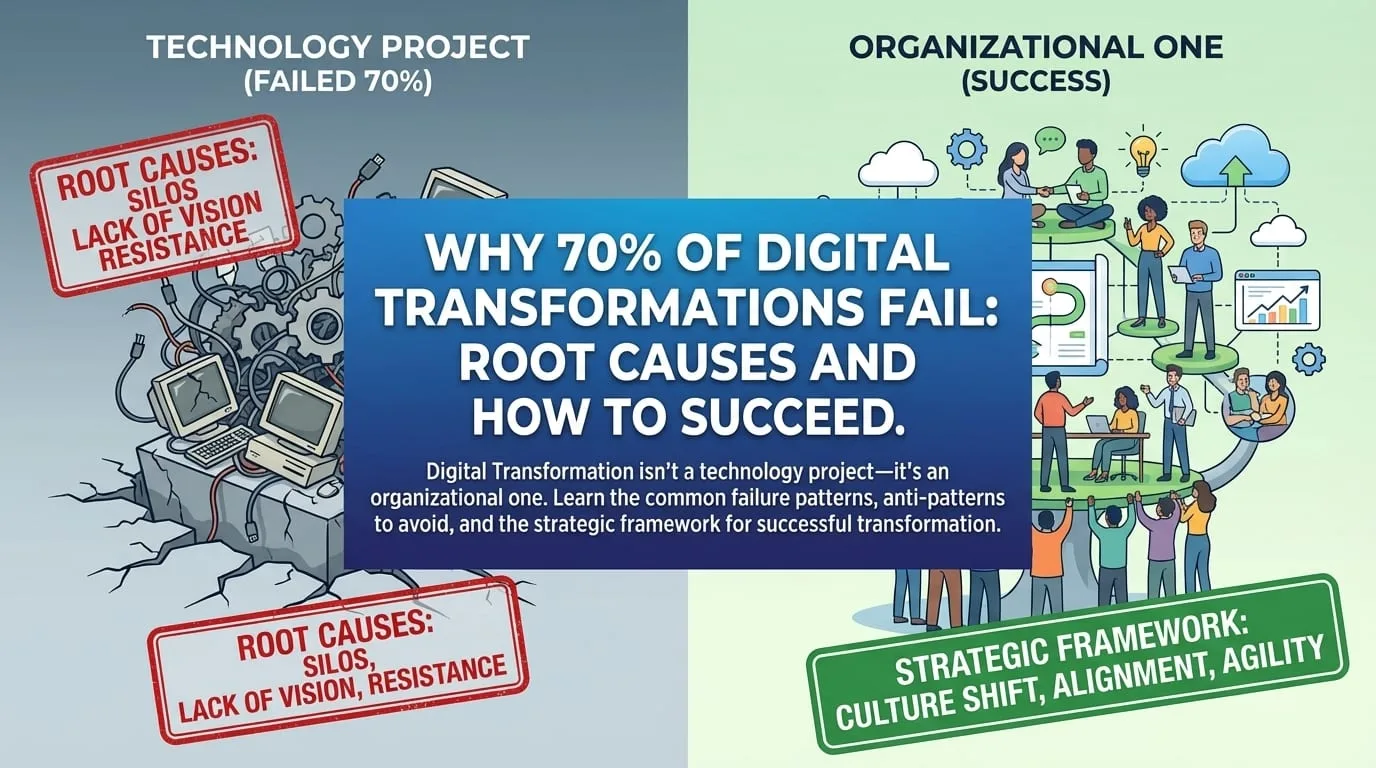
Why 70% of Digital Transformations Fail: Root Causes and How to Succeed
AI Workflow Automation: How to Identify High-ROI Use Cases Before You Build
MVP vs Prototype vs Proof of Concept: How to Choose the Right Validation Approach
Get new articles by email.
One or two a month. No marketing, no forwarding your address. Unsubscribe anytime.