Design Systems That Survive Contact with Engineering
Most design systems die the same way: beautiful in Figma, abandoned in code within a year. Here's why that happens and what actually keeps a design system alive past its launch.
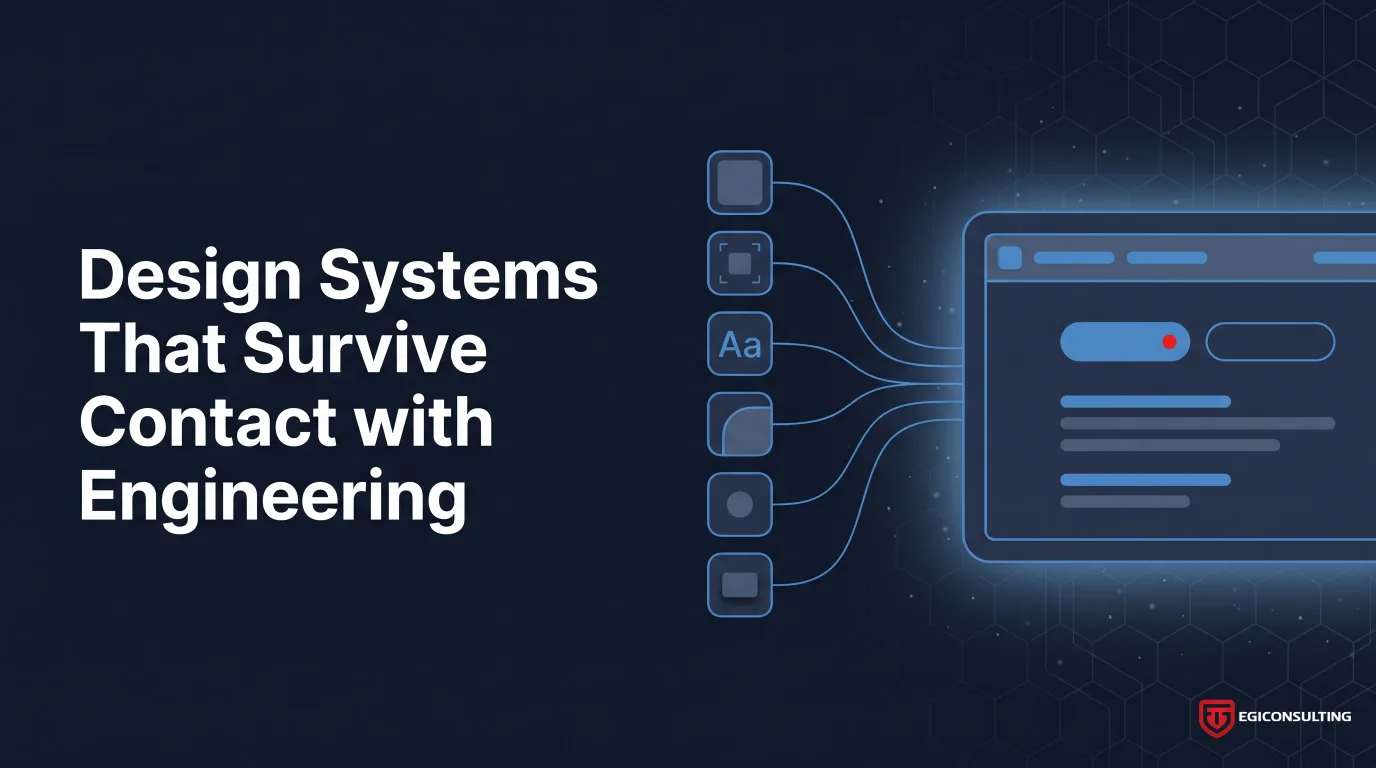
Most organizations that build a design system can point to the exact moment it stopped being followed. It's rarely a single event. It's a slow drift: one team ships a one-off button because the "real" one didn't support their case, another team copies a component instead of importing it because the import broke something, and within a year the system that was supposed to create consistency has become one more thing everyone routes around.
The failure isn't usually a design problem. The components are almost always well-designed. The failure is architectural: the system was built as a design deliverable instead of as a piece of software with the same ownership, versioning, and maintenance expectations as any other dependency your team relies on.
The Gap That Actually Kills Design Systems
A Figma library and a component library are two different artifacts that have to stay in sync forever, and most teams underestimate how much ongoing work that sync requires. The design file can be updated in an afternoon. The corresponding code change has to go through review, testing, a version bump, and adoption across every consuming team, and that gap in speed is where drift starts.
The tell that a design system has failed: engineers start describing it as "the components," not "the system." Once a design system is talked about as a static library instead of a living contract between design and engineering, it's already becoming legacy code that nobody wants to touch.
What Actually Keeps a System Alive
Tokens, not hardcoded values, as the actual source of truth
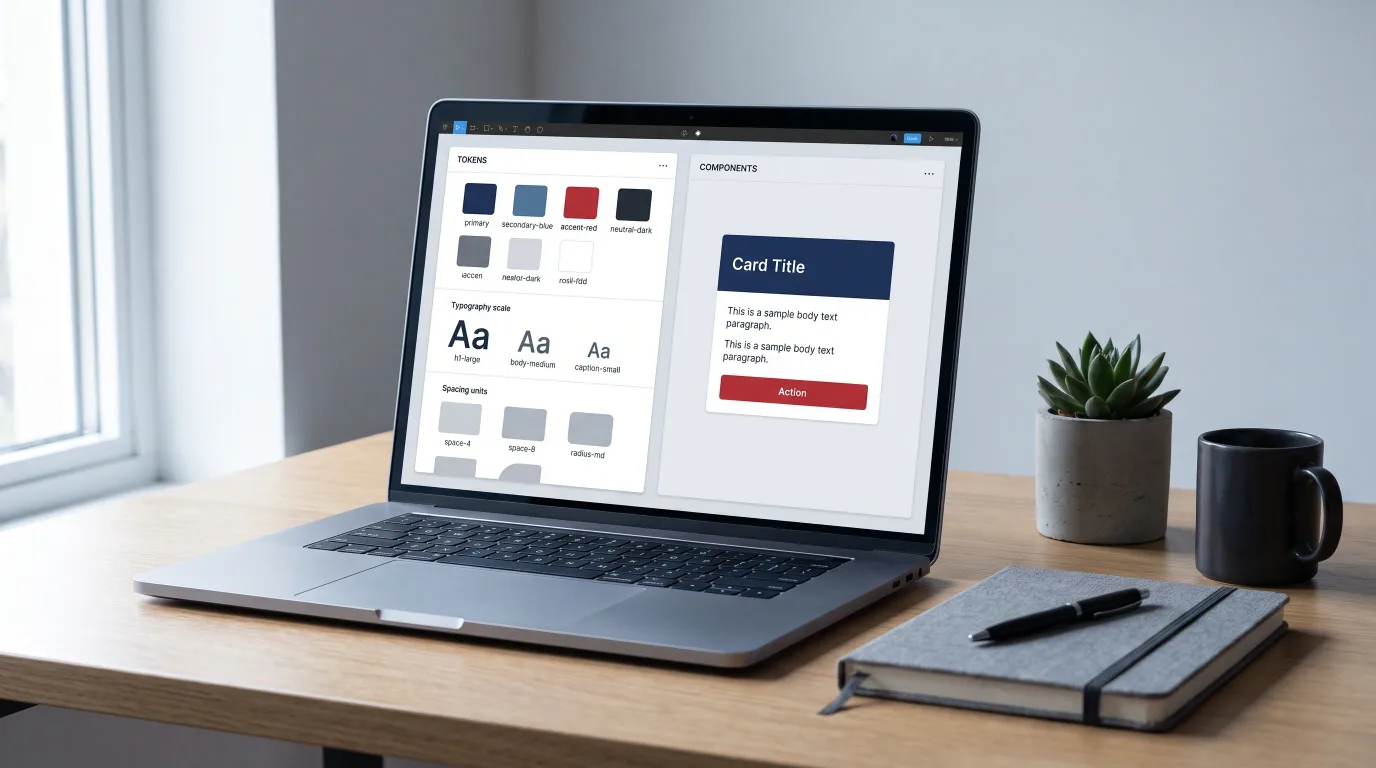
Color, spacing, typography, and radius values should live in one token file that both Figma and code read from, not two systems that happen to agree today. When a brand color changes, it should be a one-line token update that propagates everywhere, not a search-and-replace across forty components and a design file nobody remembers to update.
A real versioning and deprecation policy
Component libraries are dependencies. They need semantic versioning, changelogs, and a deprecation window, the same as any package your team installs from npm. "We changed the button API" without a migration path is how teams learn to pin an old version and never upgrade again.
An adoption owner, not just a design owner
Someone needs to be accountable for whether teams are actually using the system, not just whether it exists. That's a different job than designing components, and skipping it is the single most common reason systems stall after a strong launch: everyone assumes usage will happen organically, and it doesn't.
Escape hatches that don't require abandoning the system
If a team can't build their actual use case within the system's constraints, they'll build outside it, permanently. A well-designed system has documented, sanctioned ways to extend or override a component for an edge case, so the exception gets absorbed instead of becoming the reason a team stops importing from the library altogether.
What This Actually Looks Like
This isn't theoretical for us. Our own site runs on exactly the discipline described above: one reference document defines every color token, type scale, spacing rule, and component radius, and it's the single place either a designer or an engineer checks before making a call, rather than each guessing from the last page they happened to look at. When a rule changes, like the two-dark-sections-per-page limit, or which shade of red a hover state uses, it changes in that one file and every future page inherits it automatically. That's the entire test: can one document, not one person's memory, answer "what's correct here" for anyone on the team.
The Build-vs-Buy Question, Honestly Answered
Most teams don't need to build a design system from scratch. Radix, shadcn/ui, and similar unstyled/headless primitives handle the genuinely hard parts, accessibility, keyboard navigation, focus management, correctly, and let you invest your actual design effort in the tokens and composition layer that makes the product feel like your product instead of a generic template.
Building accessibility and interaction behavior from scratch is real engineering work with a real ongoing maintenance cost, and it rarely differentiates the product enough to justify owning it yourself. Spend the build effort on the 20% that's actually your brand and your specific component needs, not on reinventing a combobox.
A Simple Health Check
If you're not sure whether your design system is alive or quietly abandoned, three questions tend to surface the truth fast:
- When a designer changes a token, how long until it's live in production? Hours is healthy. "We'd need to schedule that" is a system that's stopped being trusted as the source of truth.
- Can you name the last three teams that adopted a new component without being told to? If adoption only happens under mandate, the system isn't winning on its own merits.
- How many components exist twice, once in the library and once copy-pasted with a small variation somewhere else? Every duplicate is a place the system already lost.
Key takeaways:
- Design systems fail architecturally, not aesthetically. The components are usually fine; the ownership and versioning model isn't.
- Tokens as a genuine shared source of truth, not just a naming convention, are what keeps design and code from drifting apart.
- Someone needs to own adoption specifically, separate from whoever owns the design work.
- Build on headless primitives like Radix for the hard, undifferentiated parts. Spend your real effort on what actually makes the product yours.
If your team's design system has quietly become "the components nobody imports anymore," that's fixable without a full rebuild. Book a discovery session and we'll figure out where it's actually losing trust.
Keep reading
All articles
GraphQL vs REST: A Complete Guide to Choosing the Right API Paradigm
The Business ROI of Web Accessibility: Why A11y Is Your Competitive Advantage

React Server Components in Next.js: A Complete Guide to the New Paradigm for Frontend Performance
Get new articles by email.
One or two a month. No marketing, no forwarding your address. Unsubscribe anytime.