Microservices vs. Monoliths: A Complete Guide to Making the Right Architectural Choice in 2024
Microservices are popular, but they aren't always the answer. Learn the trade-offs between monolithic and distributed architectures with decision frameworks and real-world migration strategies.
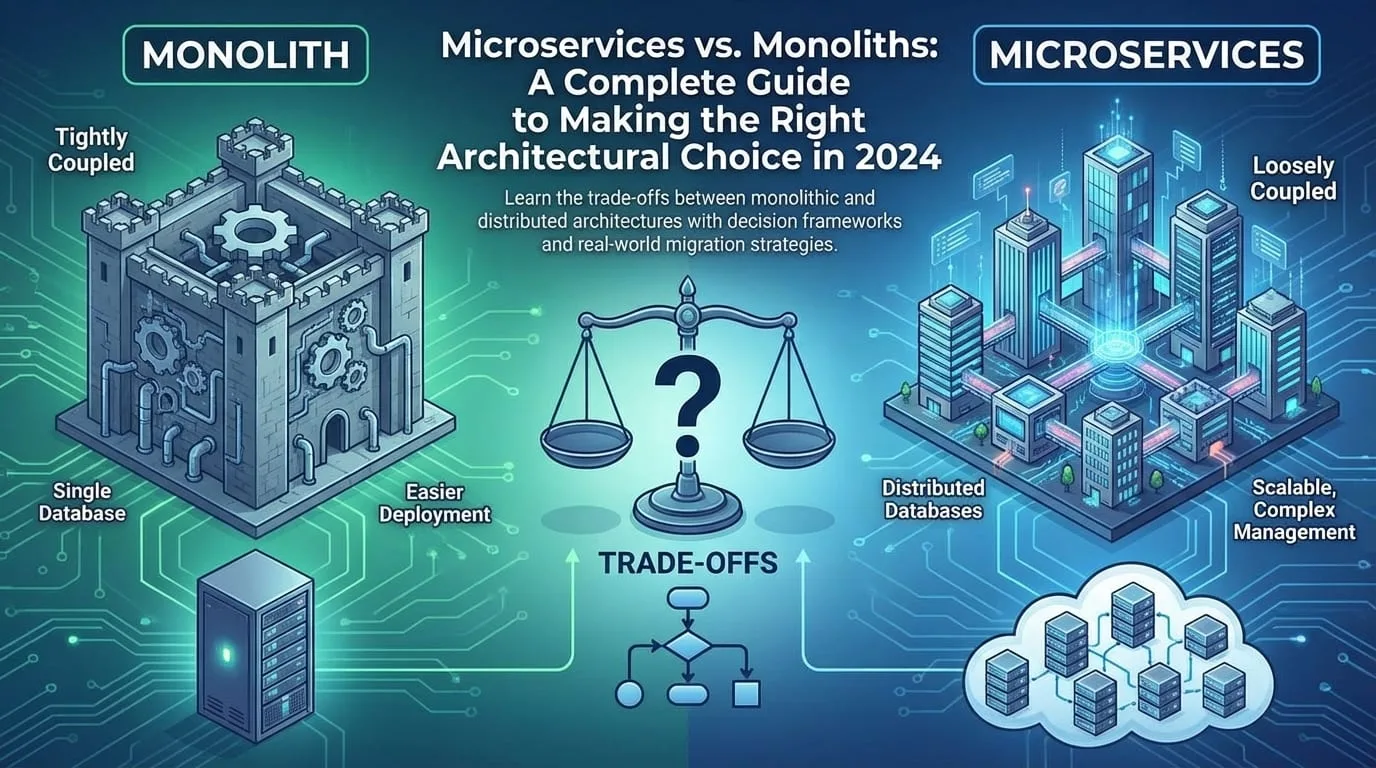
"We need to rewrite everything in microservices." It's a phrase heard in boardrooms and engineering meetings everywhere. But is it always the right call? The answer, as with most architectural decisions, is "it depends."
In this comprehensive guide, we'll move beyond the hype to explore when each architecture truly shines, provide a decision framework for your specific context, and share battle-tested strategies for migration when it's genuinely needed.
Understanding the Architectural Spectrum
Before diving into the debate, let's clarify that architecture isn't binary. There's a spectrum of options:
| Architecture | Description | Complexity | Team Size |
|---|---|---|---|
| Monolith | Single deployable unit | Low | 1-15 |
| Modular Monolith | Monolith with strict module boundaries | Low-Medium | 5-30 |
| Service-Oriented | Few large services | Medium | 15-50 |
| Microservices | Many small, independent services | High | 30-500+ |
| Serverless | Function-level decomposition | Very High | Varies |
The Case for the Monolith
A Modular Monolith is often the best choice for startups and small-to-medium teams. Don't let "monolith" become a dirty word-some of the world's most successful applications (Shopify, Basecamp, Stack Overflow) run on monolithic architectures.
Advantages of Monolithic Architecture
1. Simplicity
- Deployment is one artifact
- Testing is straightforward end-to-end
- Local development matches production closely
- Debugging doesn't require distributed tracing
2. Performance
- Function calls are in-memory, not over the network
- Zero network latency overhead
- No serialization/deserialization costs
- Simpler caching strategies
3. Consistency
- ACID transactions are easy with a single database
- No distributed transaction complexity
- Consistent data views without eventual consistency concerns
- Simpler error handling and rollback
4. Developer Experience
- Single codebase to understand
- Easier onboarding for new team members
- IDE features work seamlessly (refactoring, find usages)
- Simpler dependency management
When to Stay Monolithic
Consider maintaining a monolith when:
- Team size < 20 engineers
- Domain boundaries are fuzzy or changing rapidly
- Throughput requirements are manageable
- Strong consistency is a priority
- Your team lacks distributed systems expertise
- Time-to-market is critical
Building a Good Monolith
┌─────────────────────────────────────────────────────┐
│                  Modular Monolith                   │
├─────────────────────────────────────────────────────┤
│  ┌─────────────┐ ┌─────────────┐ ┌─────────────┐   │
│  │   Orders    │ │  Inventory  │ │   Billing   │   │
│  │   Module    │ │   Module    │ │   Module    │   │
│  │  ─────────  │ │  ─────────  │ │  ─────────  │   │
│  │ • Services  │ │ • Services  │ │ • Services  │   │
│  │ • Entities  │ │ • Entities  │ │ • Entities  │   │
│  │ • Repos     │ │ • Repos     │ │ • Repos     │   │
│  └──────┬──────┘ └──────┬──────┘ └──────┬──────┘   │
│         │              │              │            │
│         └──────────────┼──────────────┘            │
│                        │                           │
│              ┌─────────┴─────────┐                 │
│              │  Public APIs Only  │                 │
│              │  (No direct DB     │                 │
│              │   access across    │                 │
│              │   module bounds)   │                 │
│              └───────────────────┘                 │
│                        │                           │
│              ┌─────────┴─────────┐                 │
│              │   Shared Database  │                 │
│              └───────────────────┘                 │
└─────────────────────────────────────────────────────┘
Key principles for a maintainable monolith:
// ✅ Good: Clear module boundaries with public APIs
// orders/api/OrderService.ts
export interface OrderService {
  createOrder(customerId: string, items: OrderItem[]): Promise<Order>;
  getOrder(orderId: string): Promise<Order>;
}

// ❌ Bad: Direct database access across modules
// Don't do this - billing module reaching into orders table
const order = await db.query("SELECT * FROM orders WHERE id = ?", [orderId]);
The Case for Microservices
Microservices excel when you need to scale people and complexity, not just traffic. They're an organizational solution as much as a technical one.
Advantages of Microservices
1. Independent Deployment
- Team A can deploy the Billing Service without coordinating with Team B on the User Service
- Reduces deployment risk and blast radius
- Enables continuous delivery at scale
- Teams own their release cadence
2. Technology Heterogeneity
- Write the machine learning service in Python
- Build the real-time notification service in Go
- Use the right tool for each job
- Easier to adopt new technologies incrementally
3. Fault Isolation
- If the recommendation engine crashes, the checkout flow can still function
- Failures are contained to individual services
- Easier to implement circuit breakers and bulkheads
- Graceful degradation becomes possible
4. Organizational Scalability
- Teams can work independently
- Clear ownership boundaries
- Reduced cognitive load per team
- Enables Conway's Law alignment
The Hidden Costs of Microservices
Before embracing microservices, understand the true costs:
| Cost Category | Impact | Mitigation |
|---|---|---|
| Distributed Complexity | Network calls fail, need retries, circuit breakers, eventual consistency | Invest in resilience patterns |
| Observability Tax | Need robust tracing to debug requests spanning 10+ services | Jaeger, Zipkin, DataDog |
| DevOps Overhead | 50 services = 50x CI/CD config | Platform engineering team |
| Data Consistency | No ACID across services | Saga patterns, event sourcing |
| Testing Complexity | Integration testing across services | Contract testing, service virtualization |
| Latency | Network hops add milliseconds | Caching, async patterns |
| Debugging Difficulty | Distributed logs, traces, metrics | Centralized observability stack |
When Microservices Make Sense
Consider microservices when:
- Team size > 50 engineers
- Clear, stable domain boundaries
- Different services have vastly different scaling needs
- Teams need independent deployment velocity
- Different parts require different technologies
- Organization structure aligns with service boundaries
The Decision Framework
Use this flowchart to guide your architectural decision:
                    ┌─────────────────────┐
                    │ Is your team > 20   │
                    │ engineers?          │
                    └──────────┬──────────┘
                               │
                  No ──────────┼────────── Yes
                  │            │            │
                  ▼            │            ▼
        ┌─────────────────┐    │    ┌─────────────────┐
        │ Start with      │    │    │ Are domain      │
        │ Modular         │    │    │ boundaries      │
        │ Monolith        │    │    │ clear & stable? │
        └─────────────────┘    │    └────────┬────────┘
                               │             │
                               │    No ──────┼────── Yes
                               │    │        │        │
                               │    ▼        │        ▼
                               │  ┌────────────────┐  ┌────────────────┐
                               │  │ Modular        │  │ Do teams need  │
                               │  │ Monolith       │  │ independent    │
                               │  │ (clarify       │  │ deployments?   │
                               │  │ domains first) │  └───────┬────────┘
                               │  └────────────────┘          │
                               │                     No ──────┼────── Yes
                               │                     │        │        │
                               │                     ▼        │        ▼
                               │             ┌──────────────┐ │ ┌────────────────┐
                               │             │ Modular      │ │ │ MICROSERVICES  │
                               │             │ Monolith     │ │ │ (Proceed with  │
                               │             └──────────────┘ │ │ caution)       │
                               │                              │ └────────────────┘
Migration Strategies: From Monolith to Microservices
If you've determined microservices are the right path, never do a "big bang" rewrite. Use incremental strategies:
Strategy 1: Strangler Fig Pattern
The safest approach-gradually replace functionality:
Phase 1: Add a facade layer
┌─────────────────────────────────────────┐
│              API Gateway                 │
│         (Routes all traffic)             │
└──────────────────┬──────────────────────┘
                   │
                   ▼
┌─────────────────────────────────────────┐
│              Monolith                    │
│  [Users] [Orders] [Inventory] [Billing] │
└─────────────────────────────────────────┘

Phase 2: Extract first service
┌─────────────────────────────────────────┐
│              API Gateway                 │
└───────────────┬─────────────────────────┘
                │
      ┌─────────┴─────────┐
      │                   │
      ▼                   ▼
┌───────────┐   ┌─────────────────────────┐
│  Users    │   │        Monolith         │
│  Service  │   │ [Orders] [Inv] [Billing]│
└───────────┘   └─────────────────────────┘

Phase 3: Continue extraction
┌─────────────────────────────────────────┐
│              API Gateway                 │
└──┬─────────┬──────────┬──────────┬──────┘
   │         │          │          │
   ▼         ▼          ▼          ▼
┌──────┐ ┌───────┐ ┌─────────┐ ┌───────┐
│Users │ │Orders │ │Inventory│ │Billing│
│Svc   │ │Svc    │ │Svc      │ │Svc    │
└──────┘ └───────┘ └─────────┘ └───────┘
Strategy 2: Branch by Abstraction
For internal refactoring within the monolith:
// Step 1: Create abstraction
interface NotificationService {
  send(userId: string, message: string): Promise<void>;
}

// Step 2: Implement with legacy code
class LegacyNotificationService implements NotificationService {
  async send(userId: string, message: string) {
    // Old email-based implementation
  }
}

// Step 3: Implement with new service
class MicroserviceNotificationService implements NotificationService {
  async send(userId: string, message: string) {
    await fetch("http://notification-service/send", {
      method: "POST",
      body: JSON.stringify({ userId, message }),
    });
  }
}

// Step 4: Feature flag to switch
const notificationService = featureFlag.isEnabled("new-notifications")
  ? new MicroserviceNotificationService()
  : new LegacyNotificationService();
Strategy 3: Database-First Decomposition
Sometimes data is the constraint, not code:
Step 1: Identify data boundaries
┌──────────────────────────────────────────────┐
│                Shared Database               │
│  ┌─────────┐ ┌─────────┐ ┌─────────┐        │
│  │ users   │ │ orders  │ │inventory│        │
│  │ table   │ │ tables  │ │ tables  │        │
│  └─────────┘ └─────────┘ └─────────┘        │
└──────────────────────────────────────────────┘

Step 2: Create views/sync for transition
┌─────────────┐   ┌─────────────┐
│ Users DB    │   │ Shared DB   │
│ (Primary)   │←→ │ (users view)│
└─────────────┘   └─────────────┘

Step 3: Complete separation
┌─────────────┐ ┌─────────────┐ ┌─────────────┐
│  Users DB   │ │  Orders DB  │ │Inventory DB │
└─────────────┘ └─────────────┘ └─────────────┘
Anti-Patterns to Avoid
1. Distributed Monolith
The worst of both worlds-microservices that must be deployed together.
Signs you have this problem:
- Can't deploy one service without deploying others
- Circular dependencies between services
- Shared database tables across services
- Services calling each other synchronously for every operation
2. Premature Decomposition
Extracting services before understanding domain boundaries.
Result: Constant refactoring as you merge/split services.
3. Nano-Services
Too many tiny services increase overhead exponentially.
Rule of thumb: A service should be owned by 3-8 people.
4. Ignoring Organizational Readiness
Microservices without:
- Platform engineering support
- Observability infrastructure
- DevOps maturity
- On-call culture
Result: Slower, not faster development.
Key Takeaways
| Principle | Guidance |
|---|---|
| Start Simple | Don't start with microservices. Start with a modular monolith |
| Enforce Boundaries | Keep monolith modular using code (strictly defined public interfaces) |
| Extract Strategically | Only extract when a specific module becomes a bottleneck |
| Invest in Platform | Microservices require platform engineering investment |
| Measure the Right Things | Deployment frequency, lead time, not number of services |
| Understand the Costs | Distributed systems complexity is real and expensive |
The Verdict
Don't start with microservices. Start with a monolith. Keep it modular. Enforce boundaries between modules using code (e.g., strictly defined public interfaces).
If-and only if-a specific module becomes a bottleneck (deployment speed or resource scaling), extract that specific module into a microservice. This is the organic path to a distributed system.
Remember: The goal is to solve business problems, not to have the most microservices. Choose the architecture that lets your team deliver value fastest with acceptable quality.
Facing architectural decisions or considering a migration? Contact EGI Consulting for an architecture assessment and a roadmap tailored to your team size, domain, and business goals.
Keep reading
All articles
Event-Driven Architecture: Building Resilient, Scalable Systems with EDA
GraphQL vs REST: A Complete Guide to Choosing the Right API Paradigm

Observability Strategy for Modern Applications: Logs, Metrics, Traces, and Business Signals
Get new articles by email.
One or two a month. No marketing, no forwarding your address. Unsubscribe anytime.